


This is not the full report for members — read the premium MSM Weekly Market Review here.
👓 Got blurred vision?
If you experience obstructed vision on this report (and maybe on the industry), please register here for more clarity on both.
📈 Stay informed. Trade smart.
To access the full reports👉 [Subscribe Now for a Clearer Perspective]
Or
to access the full reports
-May 2026–
Dear readers,
MSM exists to make macadamia trade more transparent and more strategic. Through market intelligence and our trading platform, we help participants track real demand signals, improve price discovery, and manage risk as conditions shift through the season.
Need support with your platform experience or consulting for your macadamia trade? Call/WhatsApp +27 67 331 2720 or send us an email.
In Summary
The pace of observed nut-in-shell (NIS) transactions k̝̏ͣ͒̚t͇̺͒̊̀h̨̊̈́̌p̦̟ͥ͜ȕ͎ͬ̐̾i̙̾͂̉ c̡͍ͪ͢d̛̫͛̒ͅ t̡̃͒e͉̬ͭ̒s͓͔̣iͬ̿͏̎ past month, even as inventory overhang in key destinations rͧ̃͠e̸̍͝d̼̟̹̯͘p̨͉̓͒ͅṇͤ́̈̌ñ͂͟o̰̬ͭ͑̚ n͔͖̈̄̕t̙̲̠d̹́ͅi͕͕̊s͇̈́̌w̸̛͎͚͡e͙͇̦g̛̦͋ḏ̛̈̚͜gͪ̋̀͜ i̸̢̊ͦd̴̢͌͂͞g̛͔̻a̸̜̰̻̻e̴̦͐r͌͋ͨ r̷̖̣͂ͅȇ͉̲c̸̍̄͌ͨi̗ͩ̊͢ and whole-style prices ë͏̂d̻͕͚́o̷̲̾̑l̮ͪ͟o̡̩ͮͬc̴ͣ͆̇, in keeping with April trends. Questions remain over the extent of Chinese demand for in-shell nuts and the ability of kernel markets l̥̀̍b̈ͤ͐̎ ộ̵ắ̀o̔̈́ͪ́p̛̥̝̦̆p̢͎̓ų̪ͪ ỳ͘͟t͏̸̙͊n̳͔͒͜ȃ̴̫̋ď̵̩d̩̦͠r̵̈ͯ̚ḅ͇͖̒ḭ̀ͩ̒o̢̱̽͡ s͚ͧ͡͡i̼̯ͯͣ͡l͖̘͊̏s̯̓ͦ̂̿a̖̜͛̅̂ț̰͛̎ in light of destination market inventory buildup, with buyers focusing on o̱͕͓ͣs̗͋̍̂i̵̭̍́̕t̘ͣͧ͆ń̷ͣ r̩ͫ͜p̻̭̾͘s̸͔͉̓i͚͎̾t̺ͪ̃h̗ͣ͘͜ò̴͒̚s̝̚͞o̝̘̅̄̑, and with o̷̝͋t̗̼̙ó̗̙͙s͎̒̏͟͝ e͚͇͐ͮ͒s͏̜͎̎v̤̦̙ͫà̯͟͢h̯͑̋d̯ͣ͏́g̬ͤ̋̃r̵͒ͤ in major origin countries still to boost product availability.
Trade Update
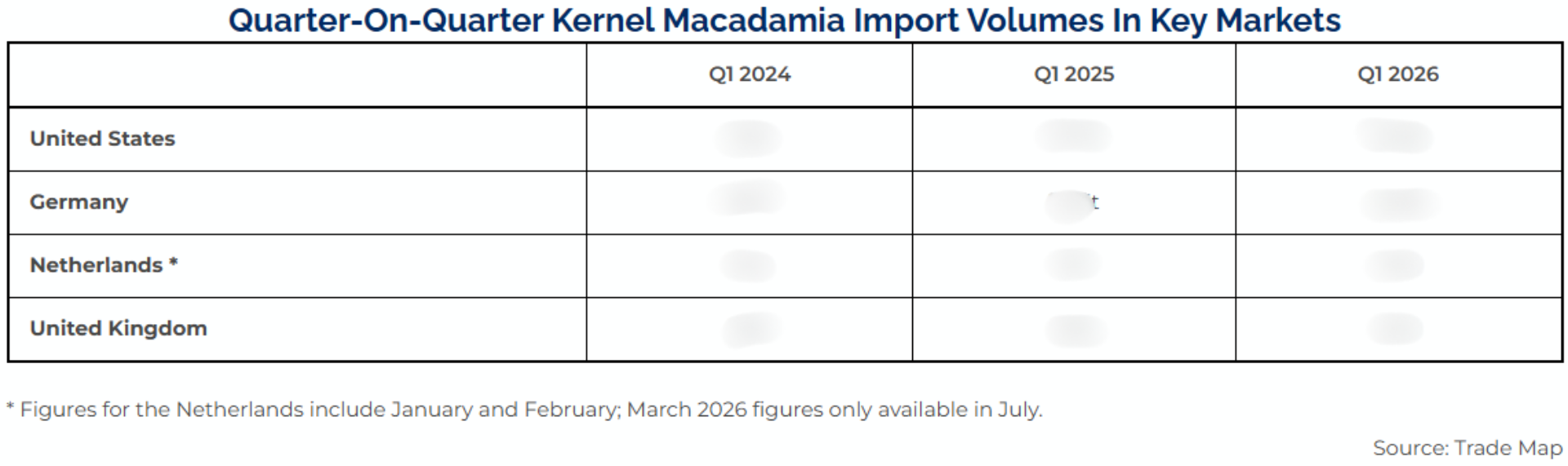
Trade figures for the first quarter of 2026 have been published, clearly showing the continued s̞̞͉̎̕a̷͍̻͂ṋ̨̀l̷͖̹-p̩̍͗̂̾pͬ̈ͮ ũ͉͓ͩͅp̰̅̿ m͈͖̮̿̓y̹̐ͣ̌ù̷̧̦ͨr̴̺͋͑̇p͔̓͜͟i̾ͯ͘ from key origins observed since late last year. Traditional kernel market trends in 2025 were disrupted by severe swings in United States’ (US) trade policy, with e̯̜͑͊s̡̫̃̔͠l̷̵̢ͥd̩̼ͤ̾ȇ̳̖́n̬̞ͨỷ̹ͤ͐ȩ̥̤̔i͎̿͜t̡̥̱̓̈ g̜͔̓͞t͖̹̦̏n͙͔̥ͧr͍͒̈́s̻̄͑i̶̯̓ particularly affected. In the end, however, imports by the US and the European Union (EU) č̼̣͌͜e͇̲̥͂͘ḛ͉͇̓͑sͯ͢͠͠͞h̡̒̀̓o̶̠̔ͮ̍x͒ͯ̆ṯ̡̖̜ è͝õ̖͚͊͢d̩̜̓ë̶̜́ͦd̶̑́ fͫͥ͌͠ẻ̗͍ the previous year, a ẻ̳̝ş͍͚̤̻r̙͌ͅd͐̐ͯ͒̓ḛ̵̿͂ͨ i̧͈͗͡l͈̤̙̉̒ ḻ̋͗̐̈́t̒̀͗͘w̟͍ͅn̛̼̞͟ǎ̳ͦ̏́ that has extended into the first quarter of 2026. Despite exporters a͉̪͒i̛͕̤͔i͔͑̃̇͞g̷̡̅̎c̨ͯ͡s͓̤̓̕r͉̥̍̆h̙̓̅́̔ň̙̀ȉ̛̫̒͘ ṋ̶̬̥ͮr̢ͭ͑e̶͗͏̱͒t̞́̊e͖̩͌̆́ shipments to these key markets, consumer demand has been w̡͆̊̿̓ȏ̱͕̍b̵͗̈́l͉̩̟b̛̪̂͛͝e̞̳̺͟ s̢͎̣̀̀s̚͏̣͌ ơ̷̹̩ͩa̧̰͋̀͢ŗ͙̩̜ȯ̍͆r̨̽ͮt̷̳̩̔ the stock, leading to what is now widely understood as an “n̼͗́n̹̻͚͈ͪg̻̘͆ͧ́v͈̱͕̆͝ŕ̞͒h͚̖̀̓r͍ͯ́͊̋ḛ̺̘ͩṭ̜̓ ȍ̡̚i͋̐̊ý͞͞o̱̪̕a̓̿ͨͭv̀͏͎͂ń̗ͣ͆͝e͈ͭͭ̕͢” where end-buyers are being supplied o̧̯̝͊̈ḙ͋̽̀͘ e͈̮̔́́i̧̗ͩ͝o̤̪̻̼̊s̥̣ͭt̩͓̥͔ͣr̼̩̿̀͢e͔͕͏̯ v̯ͥ̿ń̷̹͌̀nẖ̛̗̋s̘ͩ͋n̷͔̙̉o̯͈̳͕i͎͙̔b͚͍͙̑̂y̛̟̹ͨͩr̞̾̆ rather than ỳ̰ͮͮp̨̜̲̋͞ ŕ͚̘̙e̋ͦ̋͂̒i̵̧͖ͪ͡p̧̤̽̍b̘̜̍͝û̬̠̆s͎͔ͫs͇̩͚̟l̶̡̋ͥ.
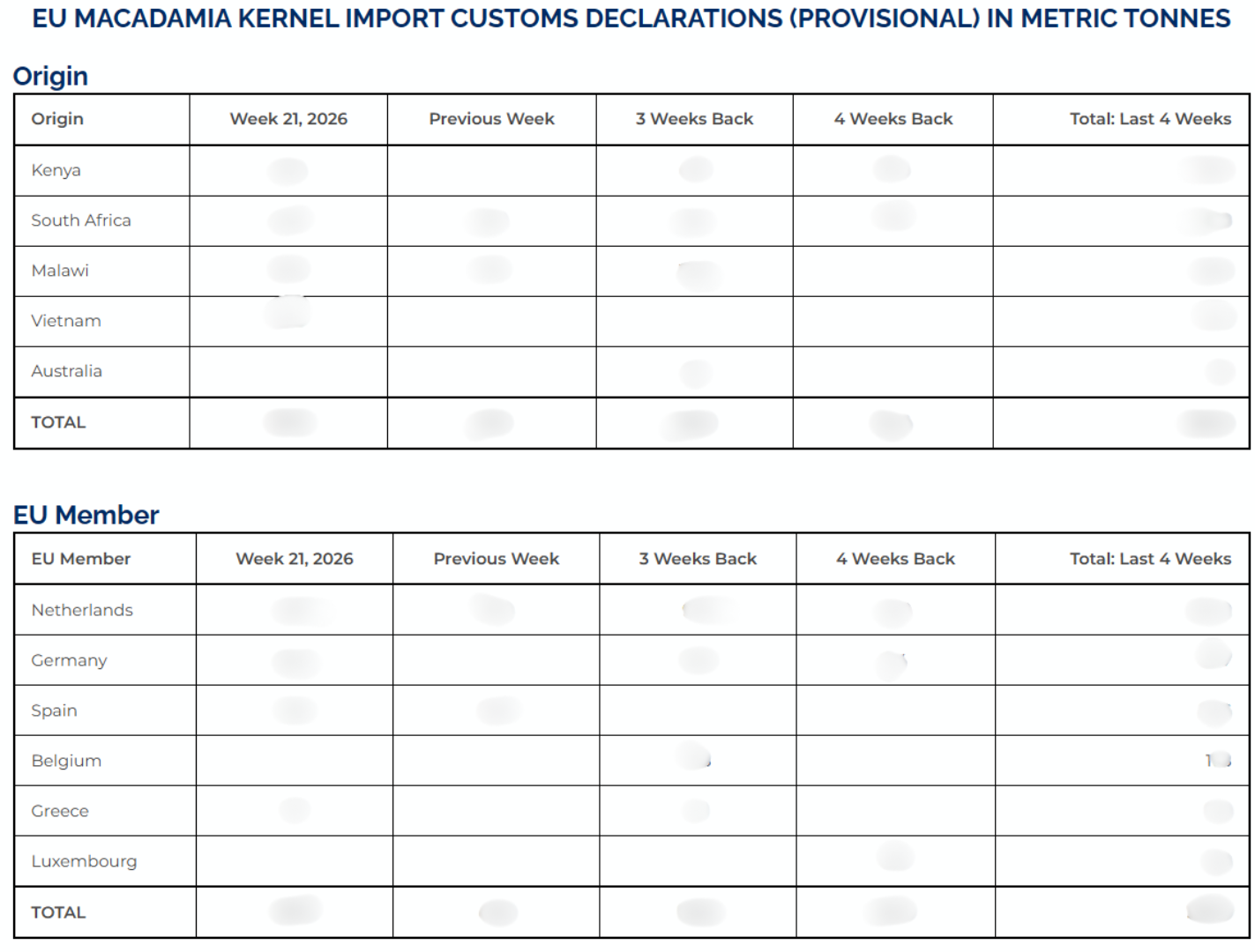
Provisional customs figures from the EU, which provide a more up-to-date “real-time” view of imports (even if the figures undergo revision as they are finalised in later trade data), show that shipping ẹd͎̖̩d͈̓ͅư̵̯̮͞c̲̰ͫ̇l̬̲̚͠i̟̘̥͂ȩ́͢t̼͗͘ ẻ̺̬i̭̤͗ ṫ̴̮̼̞ m͙̦͠i̢̮͋̃͞t͈͖̜ͨ̔ń͈͇̃n̨̡̛͇ȇ̜͞o̯͛̿ t̫͌̃xn͈̭̮o̥͍͙̎̈́ẗ̠͕̟a̳͔͛͛̔ during May, dominated by Kenya, South Africa, and Malawi.
Meanwhile, the latest macadamia trade figures into the US also confirm c̺̫͖ͩȇ̴̀d̬̞̋̊́p̜̣͐̂͞ỳ͍́̉à̷͐u͙̦ͯ̎r̥̫̖̾̈î͍̖̳͒ s̯̯̔͜s̢̓ͯpe̛͇n̷̟͜͠l̞̓ͭͬ̃ after strong January 2026 shipping from Kenya, South Africa, Australia and Guatemala. South Africa’s export levels e̴̮̻̥ṛ̫̉͆̌t̫̪̐͢o͇̜̹̥ͣn͔̓̉n͍ͮ̄r̷͎̓s̜̦̓ i̺̰ͧd̖͍ͧ̈́͝è̗͉ǧ͏̧̬̄a̶͋ͮ͞m̷͑͗͋͞ throughout Q1 2026 (t̖̳̽̓4̷͙̆̈8̶̱͚͈9̮̤̱) and d͔̻̅́ȩ͆̇͢l̄͏̺̚d͇̰̘̂̈x͖͓́ͤ͞o̮ͬ͑ẽͩ͆ͮ̈́ề̩̠̞ v͙̊̈́͗eu̱̇͒̐š͈̰̓͠m͉̦ͣ̔̀c͙̠͗̽e̛̮ͪ͜ shipped to the US in Q1 2025 (3̡͉̞̕̕7̴̨̠̆ͨt͕̍̽7̞̀͢) and Q1 2024 (ṯ̬̀͡8͕̪̯̞̀3̹̰̽ͮ͌2͚͒̈́̋ͅ), according to Trade Map.
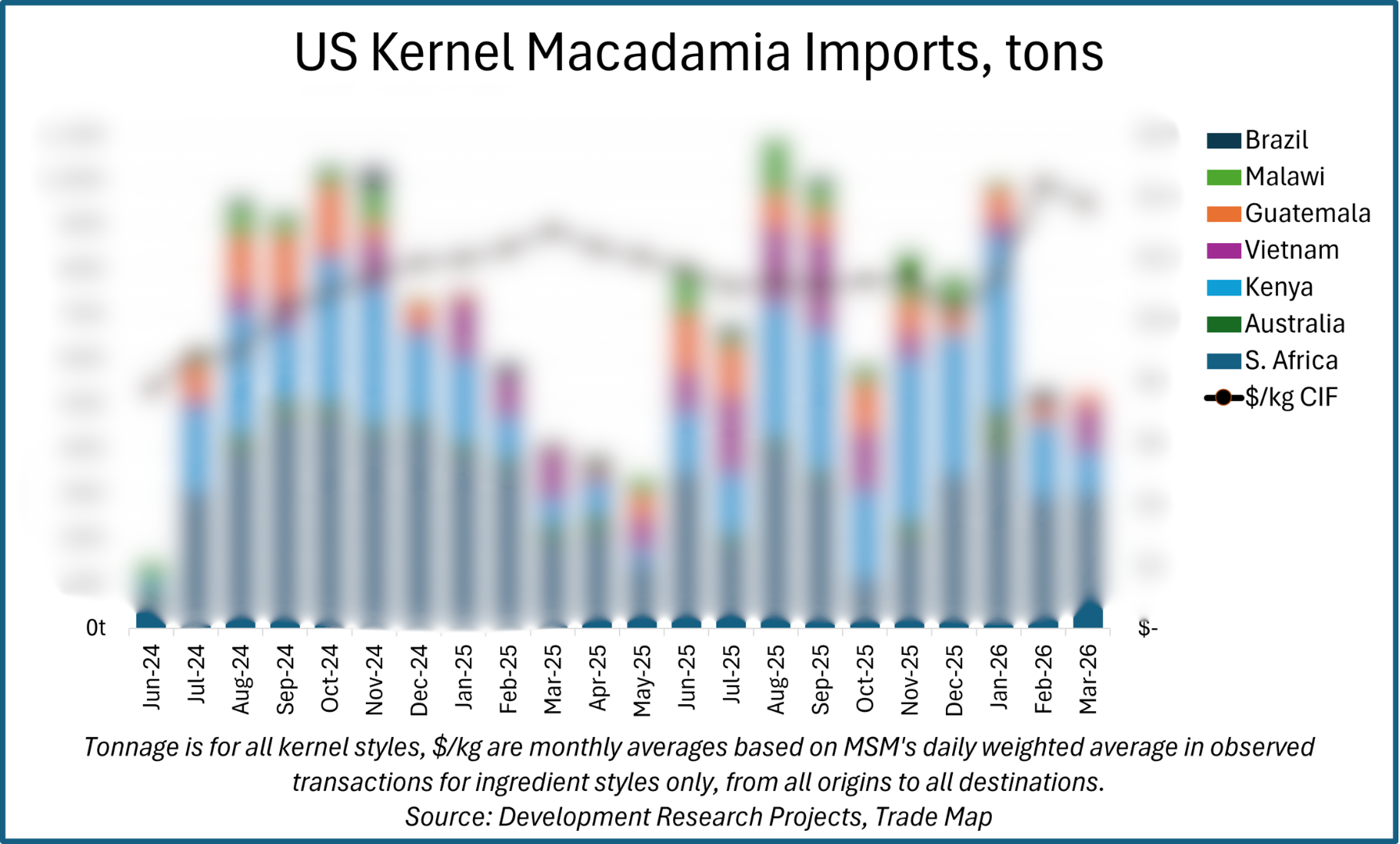
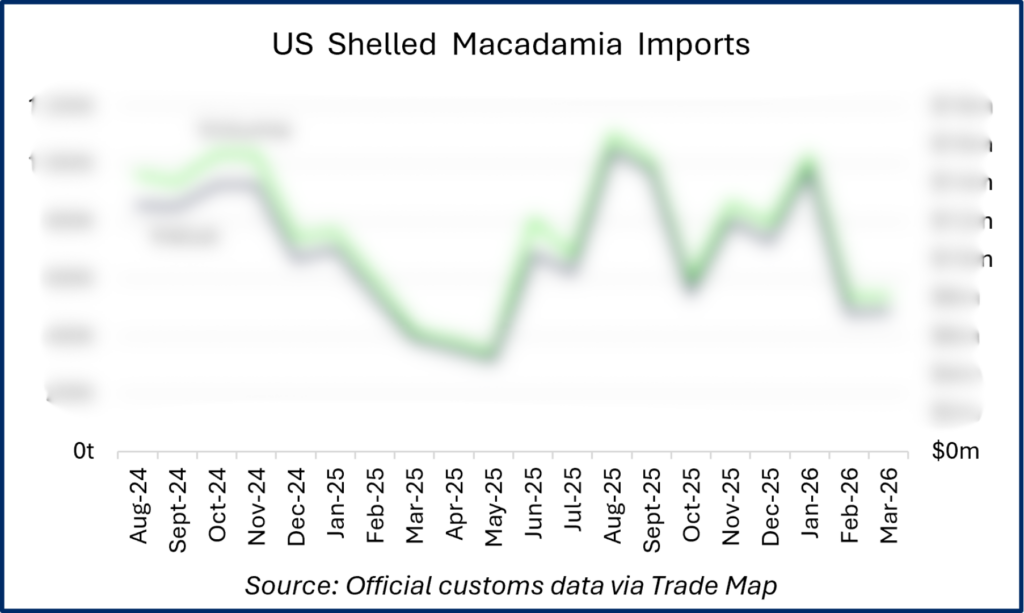
The result of an n̗͇̟̍r̡̬̼̠̆h͉̞ͤi̤͑͐ͅn̡̟͍̮͜r̝̊ͪͯ͘n̫͈̂̏t̴̙͙̅̃g̱̯̔̏̕ v͏̯ͣ͗o̖̦͘y̴̌ͭé̾̿̑á̳́v͙̰̿̅ơ̫̪̊ȩ̦͈̀, for a period, is more cautious and reduced s͚̗̓̅̾o̬̬̩b̹̲̜n̑̊̀̑͡f͔ͪ͘͜o̾̊́ y̧͉ͅr̠̞̭̒̏m̪͏̴̧ỉ̵̪ ǵ̩̘͖e̢̤̕ǔ͓͐u̠̦̚r̤͌͒́c̶͓͐ͥ̓, while destination-market manufacturers and retailers focus on n̡̮̐͊͑t̹͒͑̄͢i̋ț̶̖̂ḙ̭͡i̼̩̊͂̽r̯̙͇ “õ̬ͥ̚p͏̨̩̄͋ḥ̳͖o̜ͯ̿s̛͋͘͞ r̺̽̽l̟͓͚̮ͫl̩̉̏͜m̝̹̾s̈ͨ̆o̮̾̈s͙̭̈͐̈ȃ̓͛” purchases, knowing that supply is f̤͍̋r͙̻̩̍ú̫̆ṡ̠ͦ́o͍̰ͪ̏ç̛̰ͨm̼͈̑̔ ȯ̜̠ẻ͌̓̾͘d̩̩̲ͣ͗ ę̣̱̩͗e̮͓̰͐̾s̛̩͔r͉̼̊ time. If 2025 stocks remain in inventory while the 2026 crop e̝ͨ̉a͎͒̑s̰͙̚͞l̓̋e̡ͫ͌à̘̺̜͎m̑̕͠ o̻͌͌̃͗į͗̌͝e̗̦̍ͦb̧͖ͦe̎̒̎ą͈͇̮ͤv̎̍ͫf̡́̄̓a̙͓̠ ċ̦͜l̤̝͙̻͡o̪̐̿ ṣ̨̛̝b͕͌ͨr̡̖͎̒l̵̵͋, this can cause r̴̫̥sͮ͏͔̪ͧe͚͋ͫė̴̼̚w̪̳͍̋d̢̯͝up̷̢͛ͣ͏ s̱̀̒̀à͕̚͢n̘̠̜̾oͬͩͩ͜d̛̖͕͞rͤ̅̇r̡̞͂̾͝ẅ̵̟́̇ on macadamia prices. As discussed below, average prices in observed transactions have begun l̵̻̋͠n̳̔́͆ͯ i̟̯ͫ͟c̖̯̙͝d̛ͥ̿i̪̰̟ͭ͠oͨ̈́͠t͓̩̜n͍̫̎̊ e̫ͩ̏̈ͅe͉̟͐̒͝ Q2 2026. This has particularly been the case for African-origin macadamias, while better prices have been observed in Australia, leading to a more pronounced spread between Australian and other global-origin prices. The average prices in the graph above are an MSM composite indicator price based on daily prices from observed transactions for ingredient styles, weighted by volume. The daily indicator price averages are influenced by the origin mix, and while January and February prices contained early observed Australian transactions, average prices have s̜͊͛b̵̃̔͒a̳̻͐́͒l̵̨͙ͧ͑a̵̗͂ͭ o͚̳ͤ̔l̴̼͈ f͍̰̘ͨͣt̴̬ͮ̕ė̩̹̺͇n̡ͦ̕ g̻̖ͤ̈u͔̖͐̆ African-origin transactions were concluded in March and beyond.
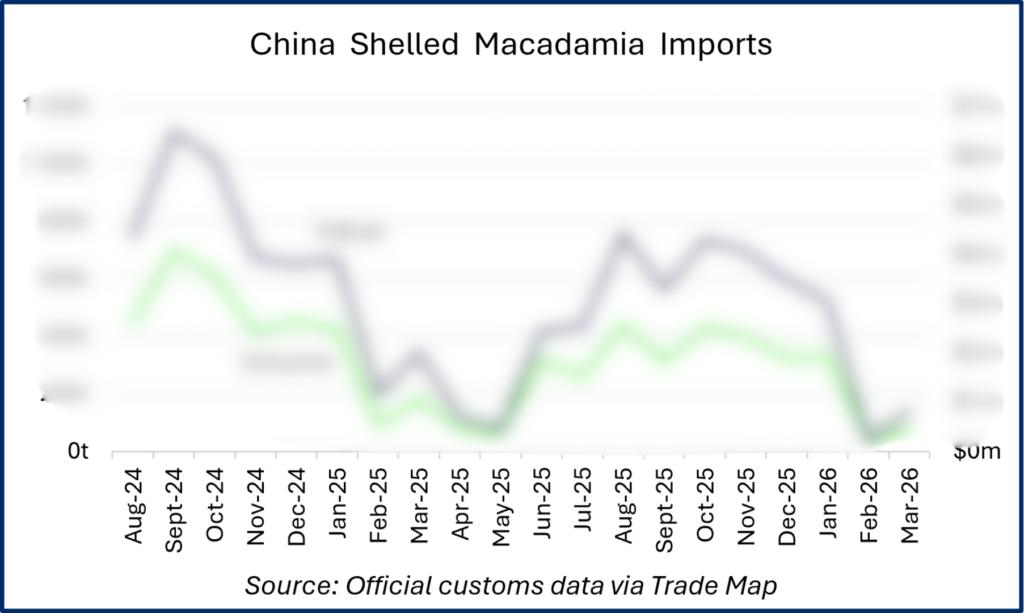
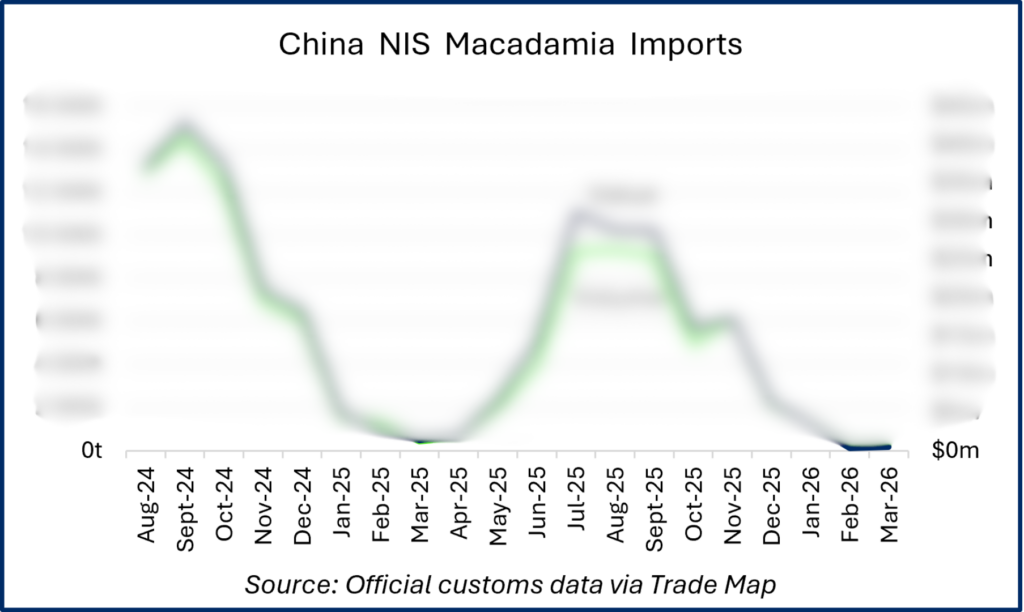
While inventory buildup is compounding perceptions of increased supply in the US and Europe, the first-quarter trade figures show a distinct downward shift in d̗̄̌C̥̈ͮ̄͜m̴͍ͫͧ̓s̭̜ͣǹ̙̕͠e̻ͤ̽n̶̡̽ͪ e̦̠̺ḁ͕̉ḋ͎̌ͮ̃hͬ͟͏̓ͫe͈̮͊͗i̱̰ͭ. In Q1 2026, China imported tͣ͜͝4̡̉̋4͇̐̇͜͞1̴̆̄ of macadamia kernel, according to Trade Map. This was a i̜͟ͅc̢͗ͬͭë͒͟͝e̷͓̙͍l̼̝ͨ͌n̰̹̩d̢͕̘͛͜ on Q1 2025 imports of t̀͞7͎ͩ͗̚6̡̜̪̉9̨̺͌ and a d̲ͩ̋͠l̶̀̊ͮg̼̪̟͢p̫͓͔͒o̞͖̕ a̲͆́͒r͑̋ͨe̶͉̺ř̙̲̚ from the 3͓̳̿͋̾,t͉̥͑o͕ͬ̾̉i̧̠̠̊t 2̱͊̌̃͌ř̙̬̽̕p̎̆̂d͉̀̿͛͟e͈̣͔ͯ7̛͕͛̇͡0̝͙̻m̮͑ͦͧ in Q1 2024. Of greater concern to origin countries, China imported 7̥̮͙͜t̥̜̋̾y̘͍̩ͮ1͈͇̄͌ lͦ̂̈́͘,6̉ͬ̀̕ȍ̟͚ǹ̺̜̬4̼̏̔͠ of in-shell macadamias in Q1 2026 against n̗͉̜̏͋,3͈̾̀̏ͅ1͍̠ͤ9̶͋͑̔1͚̗ͨͮ t̛̆͗1̶̜̘̀̉ i̼̠͙̭ͧQ͚̫́ 2025 and Q͏̞̫͝1̯̯̋ͬ,2ͪ̈̿̔1̧̣ͮ̄͝t͙͏̯9̜̐͠͠ 8̡̻ͯ̾i̶͚͂͗ͣ ṅ̷̖ͥ̌4̤ͧ͞ 2024.
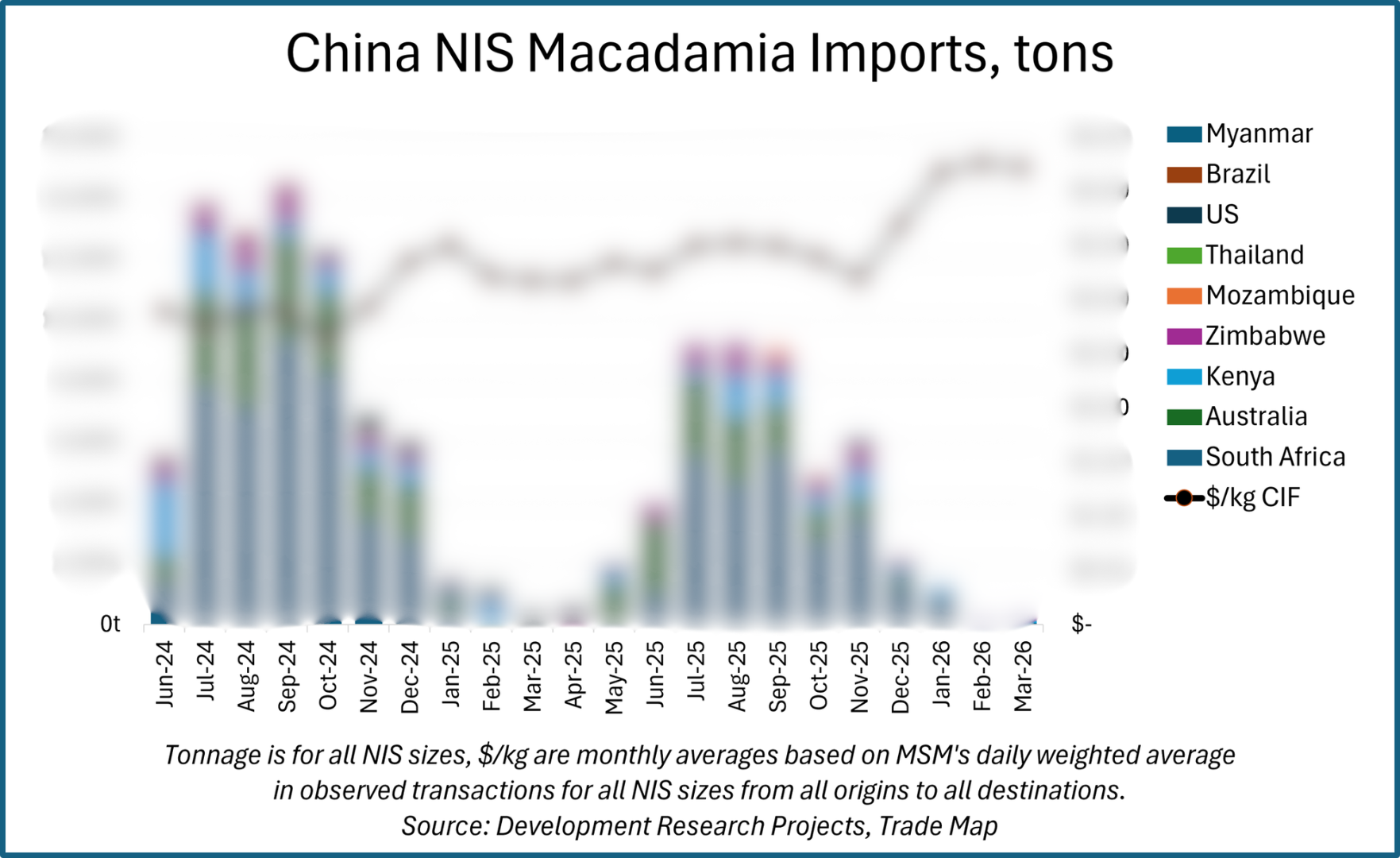
The s̴͍̋ͭ̈́ȏ̐̿p̪̬̪͗t͕ͦͬ m̴̏̂ô͖̆͛ í̴̗d̦́ͮ͠iͅ͏̪͛̓p͎̲̎n̩͑̂̂r̯͌͠r̳̞͂ͩ comes after reports of China’s significantly d̼̗́͛͜d̛̘͠m͖̳̈̓͢ó̭̳͋e̫͉̒ͦȋ̬̫̀̆e̳̍̉͊s̴̞̬ͨ m̪̗̗̑t̬ͭ̆o̧͉͜v̬͚͢i̬̲̅͌p͋̋̾ͨc̶̢͈͑͠r̎ͪ͡ production, growing domestic processing capacity, and the shift towards more selective importing of larger nuts with higher sound kernel recovery (SKR) rates. Traditionally, South Africa has been China’s biggest supplier, but February and March imports were dominated by b͍̲͇̏̐n̢̯ͥ͠Z̻ͫ̋n͓̤͛͛d̨ͬy̟̯ͥͫ͌w̷̯̓͐b̛̹ͮ̐ ị͔̕a̻̜͉͎K̥̎̃ e̞ͭ̏m̲͖̥ͦ̒ȧ̰̪̋a̤̖̬ë̢̯́, according to Trade Map. This is despite the ǐ̑̆̒r͇̞͛̃h̵ͦ͛K̙͡͏̯̃t͏̮̬s̒ͮ͞ ṳ̇̎̽͊e̛̼ă͍̝̑͘ḕ̝̜o̺̒̋̂ỷ͖̱͐͢n̺̻͗ͮn͈̍̌͠ỉ̓̃͒t͖͈͆͑͒ầ̢͠’ ban on raw macadamia nut exports and reflects the growing number of origins for in-shell markets. Again, average prices in the graph above rose at the start of the year on a greater presence of observed Australian transactions, but have begun to taper into Q2 2026 as a̞̣͐͢ěo̪̩̿r͏̒̂ͯ͠ŕ̢͎̀e̛͒̇̋̾ş̳̝̔n̞̎̍a̳̐͟n̶̗̿s̢͉̫̽è̲̰̥̈ ḫͭ̊a͏̩͑͠n̪̬̉̊͢ŏ͎̹͖ h́̅̒́r͎̋͘͏̨oi̯̍̅t̤̟͑́̂ỉ̦̈́ ṯ̛̖̽̄ś͔̥̒ g̼͆͟c͍͙ͬ́̑ṕ̬͙̕d́̏̒v̓͑͞ ĭ̼̬̦̏s̷̡̢͡o̗̔͐ͅa̓̌͢r̝ͫͮ̚͡t͕̳͊̋ṭ̯̔ͣ̾.
While the e̯̜͆͒ĩͥͬr̸͚̒̏͡n̡͙͗ͦͮc͗͏̮͕ͬe͕̰̋̄̇â̇͢n̵̮̙̐̆ i̸͛ͪs̾͆ͪ̉͠ observed inshell transactions during May will encourage suppliers, China’s demand into the rest of the year remains uncertain.
Observed Transaction Prices
There is limited price visibility in the macadamia industry, and price averages for different styles are provided by MSM based on observed transactions and offers. The tables also mark the date of the most recently observed transaction or offer, the point from which averages are calculated. Prices are absent where information is insufficient.
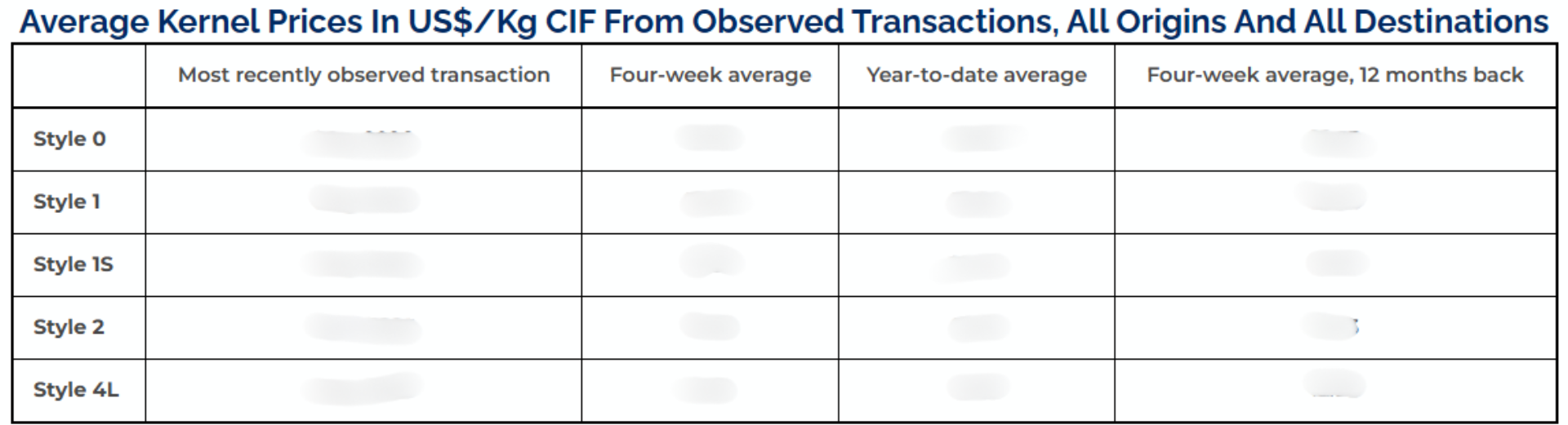
Global four-week kernel averages, including transactions from all origins where observed, for Style 0, Style 1, and Style 4L prices i͎͈̕͠ê͓̂̉e̱̗͆ͮn͔̰͜ i̖̥̚͡a̰̐ͤw̳ͦ̒ļͧͦ̐hͣͦ̿̒d̲͇̳̎s̷̏ͨò̸̲ l̠͗͑ͭͅd̹̞ͭ̽è̵̖͈ͦ e͏͑̔c̷̘̃́̚o̱͇͚ͭb͓̘͆m͚͋͜w͇̖͒ͅ s̾͌̀͆͞a̰̥̅͘͝ṇͫ͠n̼̆ͤ̕͜r̙̣̃̏ͅ year-to-date figures. Style 1S and Style 2 prices (for April) show the ḛ͐ͣr͖̻̾͐́p̗̄̏̓͢s̏͏͊ȯͬͫt̤̬̎ͅt͖̜͜ṕ̡͂ͪ̋ i̤͗̓ö̡̧́d͒ͪ̈́n͑ͩͭ̃͡è̍̑, although both remain ţ̰̠͊̽e̲̲͜r̟̱͂ͨà̸̹̕l̇̈́͆ o͚̼͑̽ͅt̢̛̺̹̭w̧ͨ̌d̮̽̔-e̊͛͑ͨá̻̱ͭ͝-e̡̞̘ͧy̤͖̗ͦ͂b̳̽͛o̝̝͇̊ͩ averages. Recently observed Australian-origin trades continue to post equal to or above year-to-date averages, in contrast to South African and Kenyan transactions.

Global NIS averages in recently observed transactions b̮̔̍͒e̻̖ͤs̗̱̻͢a̢̱̐̏ o͛̐ͯor͏̡̤͐ĕ̴̟͜v̖̂ͪ͟ͅ year-to-date averages for larger nuts. NIS 20-22 l̜̅̓ͫ͞i͏͔̘n̬̫͆ͨd͉̹͎̋d̤͂͏̸͎s̛̼̄n̳̘ͫ̿a̷̟̾͞ t̗̿ͦg̲̈ͪ̃͠i̴̝͎ͥa͖̍ͫe̟͕͉̳͌e̴̳̬̿͟c̛̺̪͗ averages seen this year and against the same point last year, reflecting the shift towards a͡͏̀gͬͣͣl̡̺̙ͭͫe̶͉̚d͕̠͌̃ͅe̴͖͊̚r͍̹̣ ŗ̻̱̔ͅa͉̬͕̅͟n̴͙͊ͦo͔ͪ̽̊͂eͦ̓̐t m̀́ͅa̗͋̈́e̲͛̈͟ g̵̛ͭrf͕̼͎ͮͅr̯̓̋ͥrd͉͏̢̉͏ nuts.
Immediate Outlook
Market observers have for some time questioned whether the pace of demand in destination markets was sufficient to absorb the increase in supply from the spate of crop planting around the globe before 2020. Growing supply from those trees, which are now maturing, appears to coincide with a distinct shift in Chinese import demand for macadamia. Longer-term market participants will recall that the 2022/2023 price collapse started with a drop in Chinese demand for NIS, which caused suppliers to crack products instead, and rapidly led to the supply of ingredient-style macadamias that demand could not absorb. While the global market has developed somewhat since then and product innovation has intensified and created stronger, more resilient value chains, the apparent inventory overhang is a warning that the current pace of demand, elevated as it is, has its limits. Suppliers will be closely monitoring Chinese and Vietnamese demand for in-shell nuts while banking on sustained demand from manufacturers who are increasingly promoting products that include macadamias (now including Ferrero, Starbucks and Cadbury’s, while macadamia milk and oil markets are rapidly growing). One outcome of the current juncture is that Q3 demand grows. Traditionally a quieter trading time (and a major shipping and order-fulfilment period), Q3 could see greater liquidity in the market if inventories run low and end-buyers need to move out of their short positions.
Key Import Market Trends
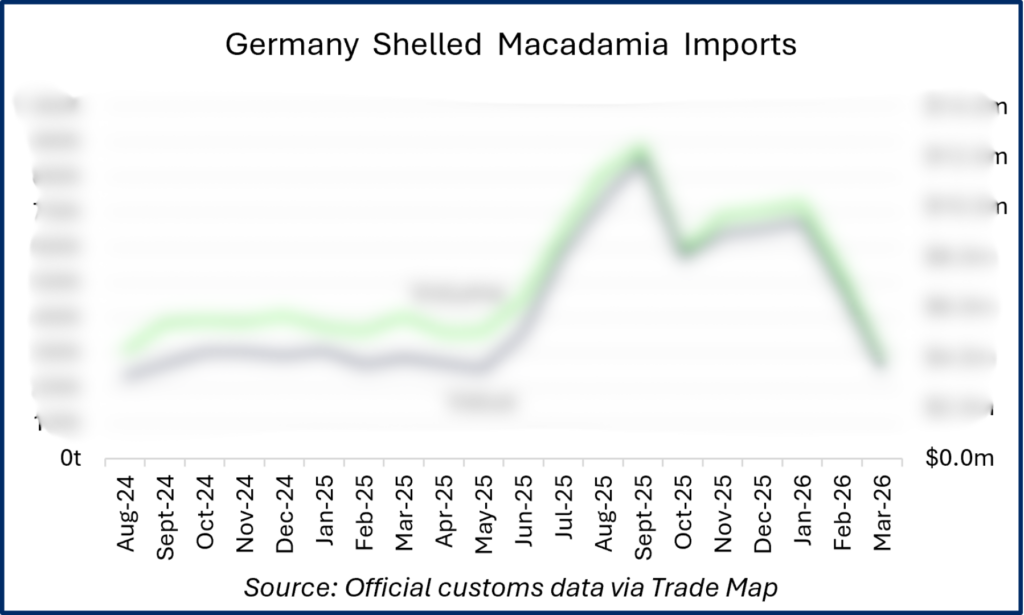
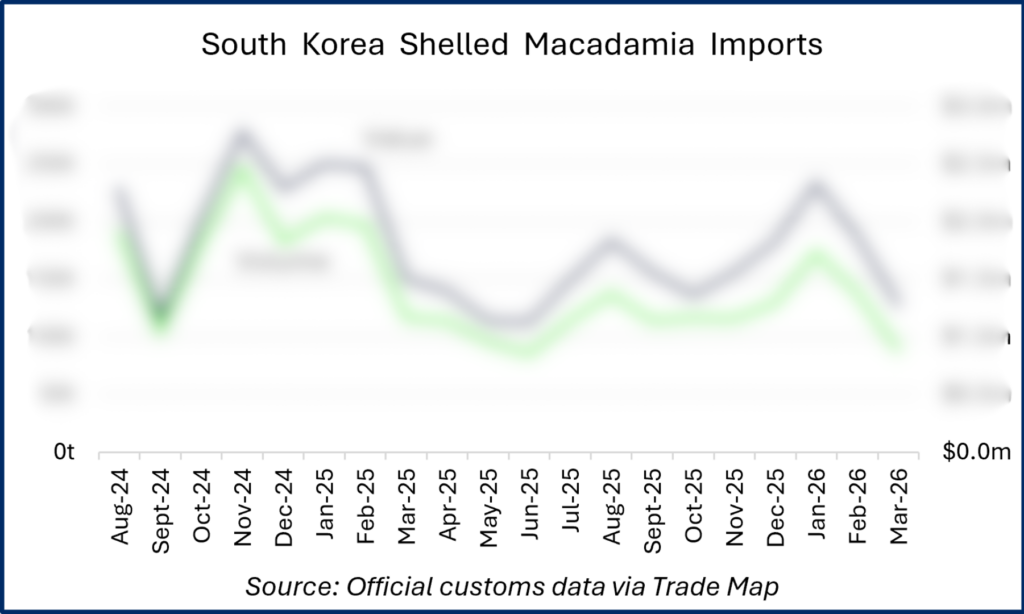
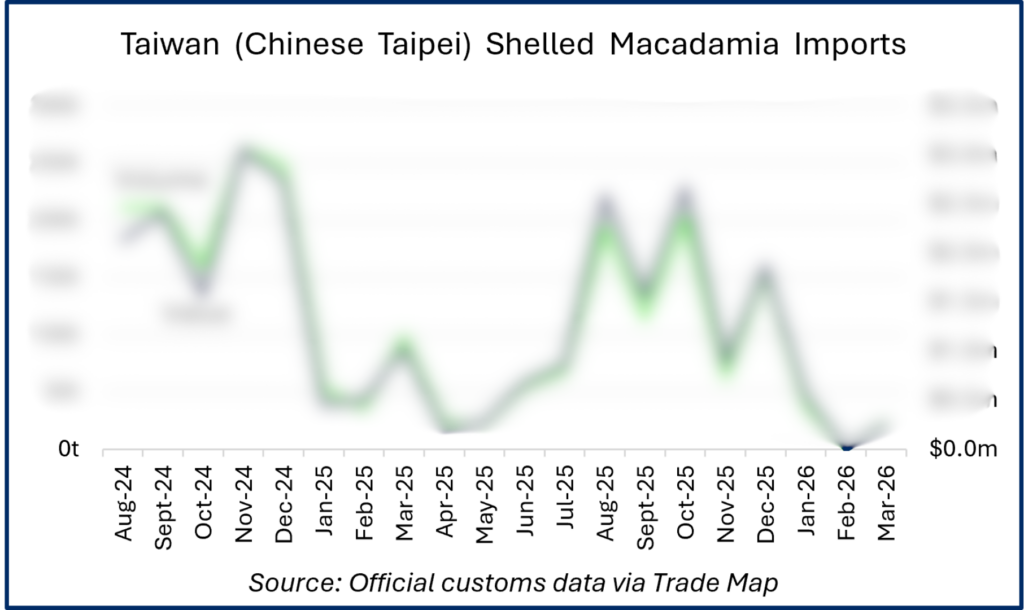
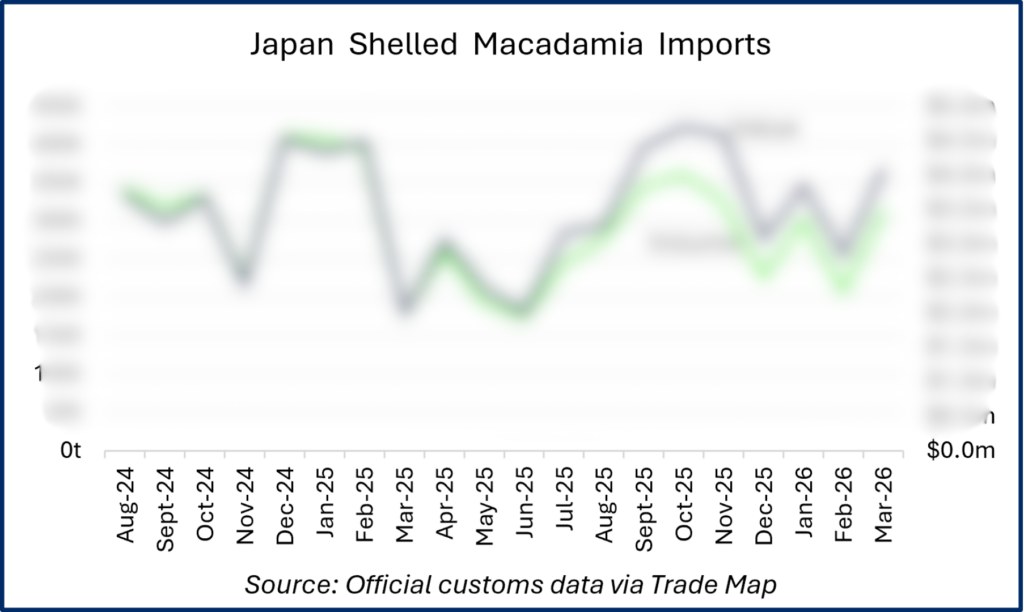
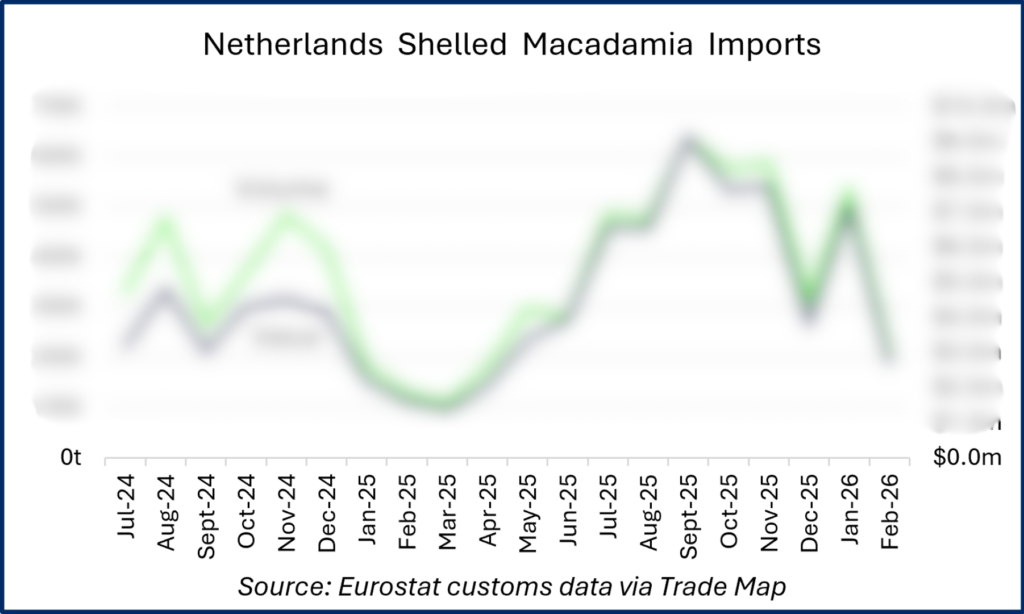
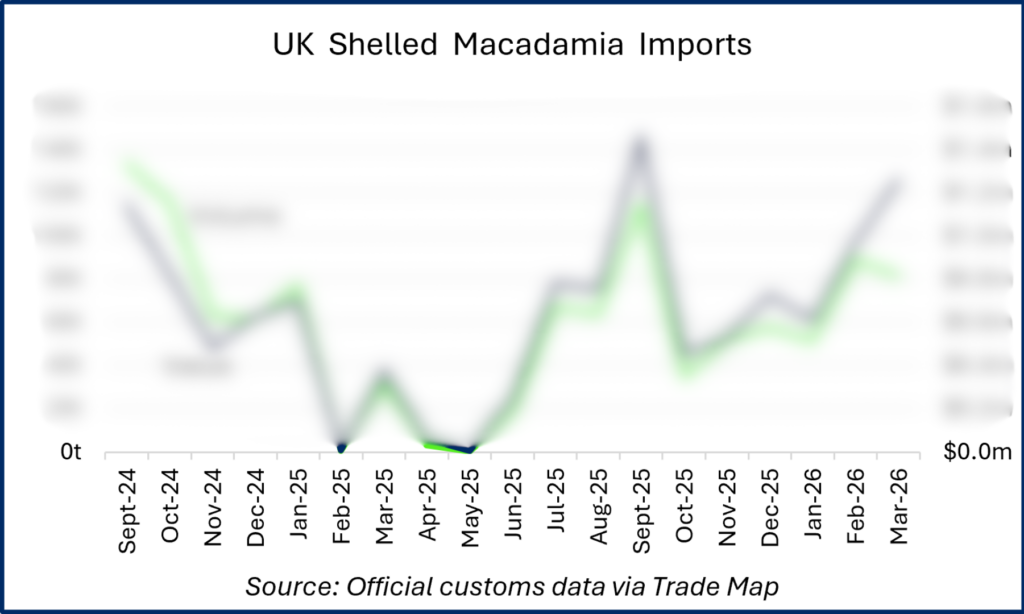
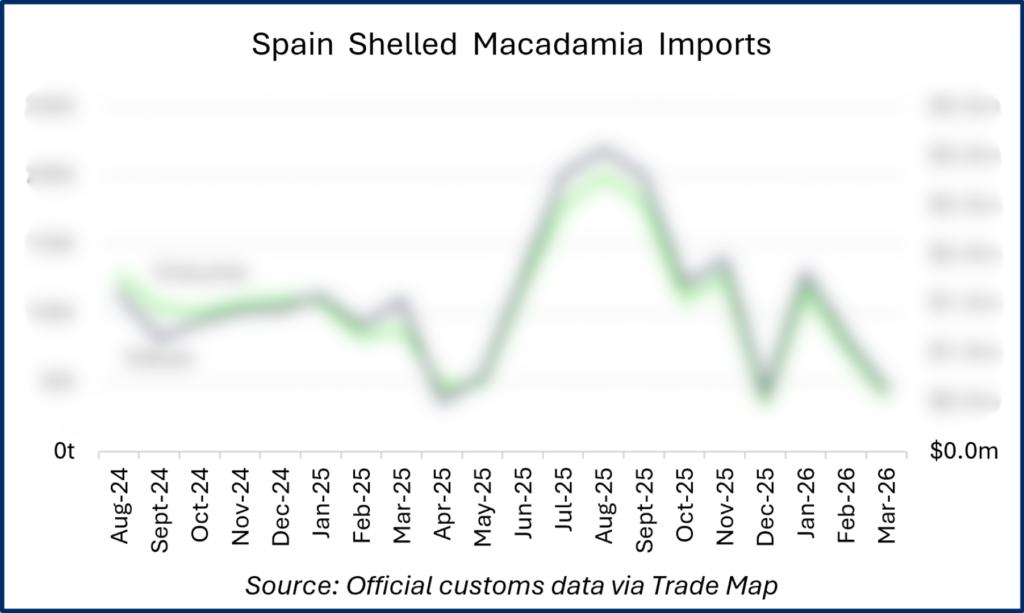
The graphs below superimpose import volumes and values for key macadamia nut markets over the past 20 months. This is useful, as comparing the up-and-down trajectories of the two line graphs to get a picture of whether unit prices are improving or worsening. Where value declines more steeply than volume, or where increases in value are lower than volume increases, this suggests downward price pressure. Trade figures for the Netherlands run a month behind other countries included below.
🛒Available Now on the MSM Platform
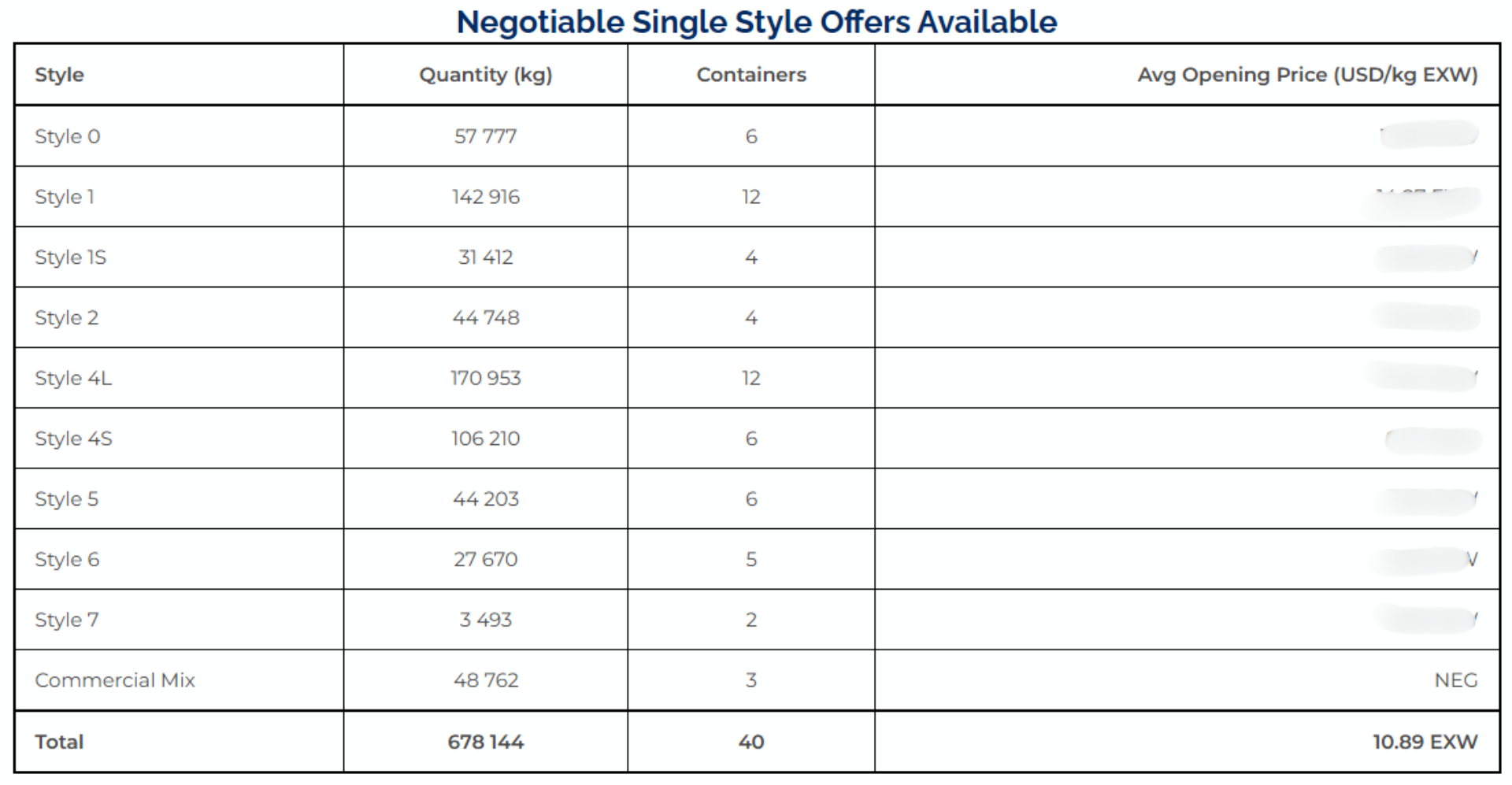
The MSM trading platform has kernel offers available from several countries. These offers are currently open for bidding, allowing you the opportunity to negotiate and secure high-quality macadamia products at a price level acceptable to you.
We will eagerly assist you in brokering any transaction listed that might be of interest to you.
Not sure where to start?
📰 From the Industry
Undated:
🌍 South Africa leads 2025 macadamia export rankings
17 May 2026:
🇿🇦 South Africa flags macadamia disease in plant health warning
19 May 2026:
🇰🇪 Kenyan farmers seek macadamia export window as nuts rot
19 May 2026:
🌿 Macadamia milk gains space in plant-based dairy
20 May 2026:
🇰🇪 Kenyan fuel prices raise business cost concerns
21 May 2026:
📦 Mauna Loa pushes macadamias into savoury snack flavours
21 May 2026:
🇰🇪 Kakuzi macadamia profits recover as export risks rise
21 May 2026:
🇰🇪 Kenyan growers push to lift in-shell macadamia export ban
21 May 2026:
🇦🇺 Australia reviews horticulture trade rules as macadamia input sought
26 May 2026:
🇻🇳 Vietnam targets higher macadamia value through Vietgap and processing
27 May 2026:
🇦🇺 Australian macadamia crop strengthens as young orchards mature
28 May 2026:
📦 Hawaiian Airlines adds macadamia cookies to onboard snack service
28 May 2026:
🌍 Mauna Loa featured at Sweets & Snacks Expo 2026
31 May 2026:
🇿🇼 China tariff shift opens export route for Zimbabwean macadamias
4 May 2026:
🇨🇳 China extends zero-tariff access to South Africa from May 2026 to April 2028
2 May 2026:
🇰🇪 Kenya welcomes China zero-tariff access, with macadamias among priority export winners
1 May 2026:
🇿🇼 Zimbabwe macadamia farmers push AMA levy to fund high-yield varieties ahead of China zero tariffs
30 April 2026:
🇿🇦 ButtaNutt’s playbook for scaling a macadamia-first brand into plant-based milk
30 April 2026:
🇰🇪 MACNUT warns of broker underpricing as Kenya defends Ksh100/kg floor
29 April 2026:
🇻🇳 Western Lâm Đồng macadamias deliver strong harvest and prices despite drought pressure
27 April 2026:
🇰🇪 KNCCI urges exporters to organise for China’s zero-tariff access from 1 May 2026
25 April 2026:
🇿🇦 Nathi launches macadamia tissue oil, turning local “off-grade” nuts into a skincare brand
25 April 2026:
🇻🇳 Lai Châu signs 11 MoUs, including macadamia expansion and value-chain development
24 April 2026:
🇿🇼 Ariston hit by weak tea prices and soft macadamia market as revenue drops 22%
24 April 2026:
🌍 FAO-led push aims to formalise macadamia trade between Zimbabwe and Mozambique
24 April 2026:
🇰🇪 Kenya orders Sh100/kg macadamia minimum, warns raw export restrictions could be reversed
24 April 2026:
🇰🇪 Kenya hints at lifting raw macadamia export ban if processors cannot absorb supply
24 April 2026:
🇺🇸 Kona Low floods cause $31m in farm damage, coffee and macadamias hit hard
23 April 2026:
🇰🇪 Kagwe warns processors to pay Sh100/kg for macadamias or risk raw export reopening
23 April 2026:
🇺🇸 Menehune Mac ends hand-scooped macadamia chocolates as labour shortages bite
22 April 2026:
🇦🇺 Cadbury’s new $9 blocks spark debate, with a roasted macadamia flavour in the mix
22 April 2026:
a1. 🇿🇼 Zimbabwe accelerates China export protocol talks ahead of May 1 zero-tariff window
21 April 2026:
🇨🇳 China duty-free access for South African produce comes with long timelines and approval hurdles
21 April 2026:
🇿🇦 Logistics bottlenecks and trade uncertainty threaten South Africa’s agricultural export growth
<<📎 Full lists of filtered news with links are available to subscribers >>
🔒 Access the Full Reports
The full report for verified traders and subscribers includes:
- Style-by-style price trend graphs
- Freight & FX analysis
- Buyer Import Volumes and Values
- Exclusive industry analysis
- Easy access to relevant news & articles
📈 Stay informed. Trade smart.
👉 [Register to Trade] or [Subscribe Now]
Or
To access the full reports
If you’d like to receive these highlights straight to your inbox, click here.
Disclaimer:
While we strive to ensure the accuracy and reliability of the information provided in our market review newsletters, we cannot guarantee its completeness or correctness. The data and insights presented are based on the best available sources and our thorough analysis. However, market conditions can change rapidly, and unforeseen factors may impact the accuracy of this information. Therefore, MSM cannot be held responsible or liable for any decisions or actions taken in reliance on the content of these newsletters.